Zuni War Bonnet Concho Belt
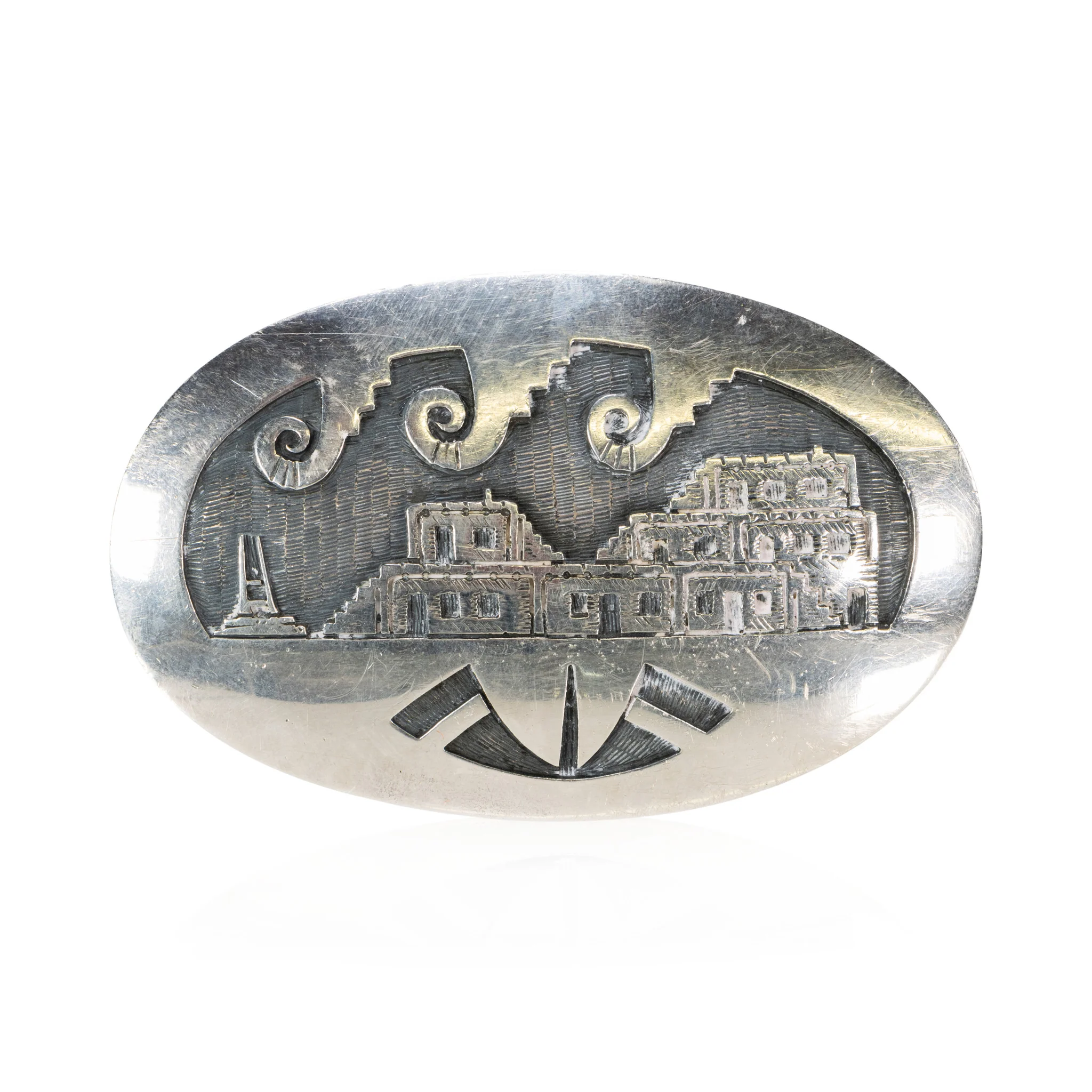
Zuni concho belt. With inlay war bonnet-shaped conchos having mother of pearl, turquoise, onyx, and coral stones on sterling silver. Eight conchos total.
The word “concho” sometimes spelled “concha”, comes from the Spanish word meaning shell. Some of the first “conchos” were made of melted silver dollars and resembled a shell. Concho belts reportedly began appearing in Navajo country in the late 1860s. Other Native Americans including Zuni and Hopi also made traditional concho belts before long. Concho belts can cost into the thousands of dollars depending upon the craftsmanship, amount of silver, rarity of turquoise and stones used. Belts in the upper end of the price scales are usually made before the turn of the century. Buyers should deal with reputable dealers as many fakes and look-a-likes exist. A well-made belt with age to it will fetch a bigger premium and hold its value better. The earliest concho belts are now referred to as “First Phase” belts. This style of belt was made before Native silversmith had learned much about soldering. The conchos were hammered out from melted coins, cut, and filed into shape, engraved and a diamond shape slot was cut out of the middle of the concho, with a bar left across the center of the diamond shaped slot for the leather loop. Conchos that required no soldering are generally thought to be made from 1860-1880. Second phase conchos were done 1890-1900s in which silversmith began to solder. Third phase conchos is when you start to see the “butterfly” or “bow” appear between conchos and the use of turquoise as an adornment. A butterfly (bow) is a smaller concho in between bigger conchos. A belt with butterflies and sometimes turquoise would be from the early 1900s – 1930s. The timelines may slightly differentiate depending upon who you ask. Natives first had concho belts for personal use only, but around the turn of the last century, tourist demand had kicked in and a new outlet emerged.
The word “concho” sometimes spelled “concha”, comes from the Spanish word meaning shell. Some of the first “conchos” were made of melted silver dollars and resembled a shell. Concho belts reportedly began appearing in Navajo country in the late 1860s. Other Native Americans including Zuni and Hopi also made traditional concho belts before long. Concho belts can cost into the thousands of dollars depending upon the craftsmanship, amount of silver, rarity of turquoise and stones used. Belts in the upper end of the price scales are usually made before the turn of the century. Buyers should deal with reputable dealers as many fakes and look-a-likes exist. A well-made belt with age to it will fetch a bigger premium and hold its value better. The earliest concho belts are now referred to as “First Phase” belts. This style of belt was made before Native silversmith had learned much about soldering. The conchos were hammered out from melted coins, cut, and filed into shape, engraved and a diamond shape slot was cut out of the middle of the concho, with a bar left across the center of the diamond shaped slot for the leather loop. Conchos that required no soldering are generally thought to be made from 1860-1880. Second phase conchos were done 1890-1900s in which silversmith began to solder. Third phase conchos is when you start to see the “butterfly” or “bow” appear between conchos and the use of turquoise as an adornment. A butterfly (bow) is a smaller concho in between bigger conchos. A belt with butterflies and sometimes turquoise would be from the early 1900s – 1930s. The timelines may slightly differentiate depending upon who you ask. Natives first had concho belts for personal use only, but around the turn of the last century, tourist demand had kicked in and a new outlet emerged.
PERIOD: Last Half 20th Century
ORIGIN: Southwest - Zuni, Native American
SIZE: Total belt length 39"; conchos 2 3/4" x 2 3/4"
$1,925.00
Original: $5,500.00
-65%Zuni War Bonnet Concho Belt—
$5,500.00
$1,925.00More Images

Zuni War Bonnet Concho Belt
Zuni concho belt. With inlay war bonnet-shaped conchos having mother of pearl, turquoise, onyx, and coral stones on sterling silver. Eight conchos total.
The word “concho” sometimes spelled “concha”, comes from the Spanish word meaning shell. Some of the first “conchos” were made of melted silver dollars and resembled a shell. Concho belts reportedly began appearing in Navajo country in the late 1860s. Other Native Americans including Zuni and Hopi also made traditional concho belts before long. Concho belts can cost into the thousands of dollars depending upon the craftsmanship, amount of silver, rarity of turquoise and stones used. Belts in the upper end of the price scales are usually made before the turn of the century. Buyers should deal with reputable dealers as many fakes and look-a-likes exist. A well-made belt with age to it will fetch a bigger premium and hold its value better. The earliest concho belts are now referred to as “First Phase” belts. This style of belt was made before Native silversmith had learned much about soldering. The conchos were hammered out from melted coins, cut, and filed into shape, engraved and a diamond shape slot was cut out of the middle of the concho, with a bar left across the center of the diamond shaped slot for the leather loop. Conchos that required no soldering are generally thought to be made from 1860-1880. Second phase conchos were done 1890-1900s in which silversmith began to solder. Third phase conchos is when you start to see the “butterfly” or “bow” appear between conchos and the use of turquoise as an adornment. A butterfly (bow) is a smaller concho in between bigger conchos. A belt with butterflies and sometimes turquoise would be from the early 1900s – 1930s. The timelines may slightly differentiate depending upon who you ask. Natives first had concho belts for personal use only, but around the turn of the last century, tourist demand had kicked in and a new outlet emerged.
The word “concho” sometimes spelled “concha”, comes from the Spanish word meaning shell. Some of the first “conchos” were made of melted silver dollars and resembled a shell. Concho belts reportedly began appearing in Navajo country in the late 1860s. Other Native Americans including Zuni and Hopi also made traditional concho belts before long. Concho belts can cost into the thousands of dollars depending upon the craftsmanship, amount of silver, rarity of turquoise and stones used. Belts in the upper end of the price scales are usually made before the turn of the century. Buyers should deal with reputable dealers as many fakes and look-a-likes exist. A well-made belt with age to it will fetch a bigger premium and hold its value better. The earliest concho belts are now referred to as “First Phase” belts. This style of belt was made before Native silversmith had learned much about soldering. The conchos were hammered out from melted coins, cut, and filed into shape, engraved and a diamond shape slot was cut out of the middle of the concho, with a bar left across the center of the diamond shaped slot for the leather loop. Conchos that required no soldering are generally thought to be made from 1860-1880. Second phase conchos were done 1890-1900s in which silversmith began to solder. Third phase conchos is when you start to see the “butterfly” or “bow” appear between conchos and the use of turquoise as an adornment. A butterfly (bow) is a smaller concho in between bigger conchos. A belt with butterflies and sometimes turquoise would be from the early 1900s – 1930s. The timelines may slightly differentiate depending upon who you ask. Natives first had concho belts for personal use only, but around the turn of the last century, tourist demand had kicked in and a new outlet emerged.
PERIOD: Last Half 20th Century
ORIGIN: Southwest - Zuni, Native American
SIZE: Total belt length 39"; conchos 2 3/4" x 2 3/4"
Product Information
Product Information
Shipping & Returns
Shipping & Returns
Description
Zuni concho belt. With inlay war bonnet-shaped conchos having mother of pearl, turquoise, onyx, and coral stones on sterling silver. Eight conchos total.
The word “concho” sometimes spelled “concha”, comes from the Spanish word meaning shell. Some of the first “conchos” were made of melted silver dollars and resembled a shell. Concho belts reportedly began appearing in Navajo country in the late 1860s. Other Native Americans including Zuni and Hopi also made traditional concho belts before long. Concho belts can cost into the thousands of dollars depending upon the craftsmanship, amount of silver, rarity of turquoise and stones used. Belts in the upper end of the price scales are usually made before the turn of the century. Buyers should deal with reputable dealers as many fakes and look-a-likes exist. A well-made belt with age to it will fetch a bigger premium and hold its value better. The earliest concho belts are now referred to as “First Phase” belts. This style of belt was made before Native silversmith had learned much about soldering. The conchos were hammered out from melted coins, cut, and filed into shape, engraved and a diamond shape slot was cut out of the middle of the concho, with a bar left across the center of the diamond shaped slot for the leather loop. Conchos that required no soldering are generally thought to be made from 1860-1880. Second phase conchos were done 1890-1900s in which silversmith began to solder. Third phase conchos is when you start to see the “butterfly” or “bow” appear between conchos and the use of turquoise as an adornment. A butterfly (bow) is a smaller concho in between bigger conchos. A belt with butterflies and sometimes turquoise would be from the early 1900s – 1930s. The timelines may slightly differentiate depending upon who you ask. Natives first had concho belts for personal use only, but around the turn of the last century, tourist demand had kicked in and a new outlet emerged.
The word “concho” sometimes spelled “concha”, comes from the Spanish word meaning shell. Some of the first “conchos” were made of melted silver dollars and resembled a shell. Concho belts reportedly began appearing in Navajo country in the late 1860s. Other Native Americans including Zuni and Hopi also made traditional concho belts before long. Concho belts can cost into the thousands of dollars depending upon the craftsmanship, amount of silver, rarity of turquoise and stones used. Belts in the upper end of the price scales are usually made before the turn of the century. Buyers should deal with reputable dealers as many fakes and look-a-likes exist. A well-made belt with age to it will fetch a bigger premium and hold its value better. The earliest concho belts are now referred to as “First Phase” belts. This style of belt was made before Native silversmith had learned much about soldering. The conchos were hammered out from melted coins, cut, and filed into shape, engraved and a diamond shape slot was cut out of the middle of the concho, with a bar left across the center of the diamond shaped slot for the leather loop. Conchos that required no soldering are generally thought to be made from 1860-1880. Second phase conchos were done 1890-1900s in which silversmith began to solder. Third phase conchos is when you start to see the “butterfly” or “bow” appear between conchos and the use of turquoise as an adornment. A butterfly (bow) is a smaller concho in between bigger conchos. A belt with butterflies and sometimes turquoise would be from the early 1900s – 1930s. The timelines may slightly differentiate depending upon who you ask. Natives first had concho belts for personal use only, but around the turn of the last century, tourist demand had kicked in and a new outlet emerged.
PERIOD: Last Half 20th Century
ORIGIN: Southwest - Zuni, Native American
SIZE: Total belt length 39"; conchos 2 3/4" x 2 3/4"