Casas Grandes Ramos Pottery Olla
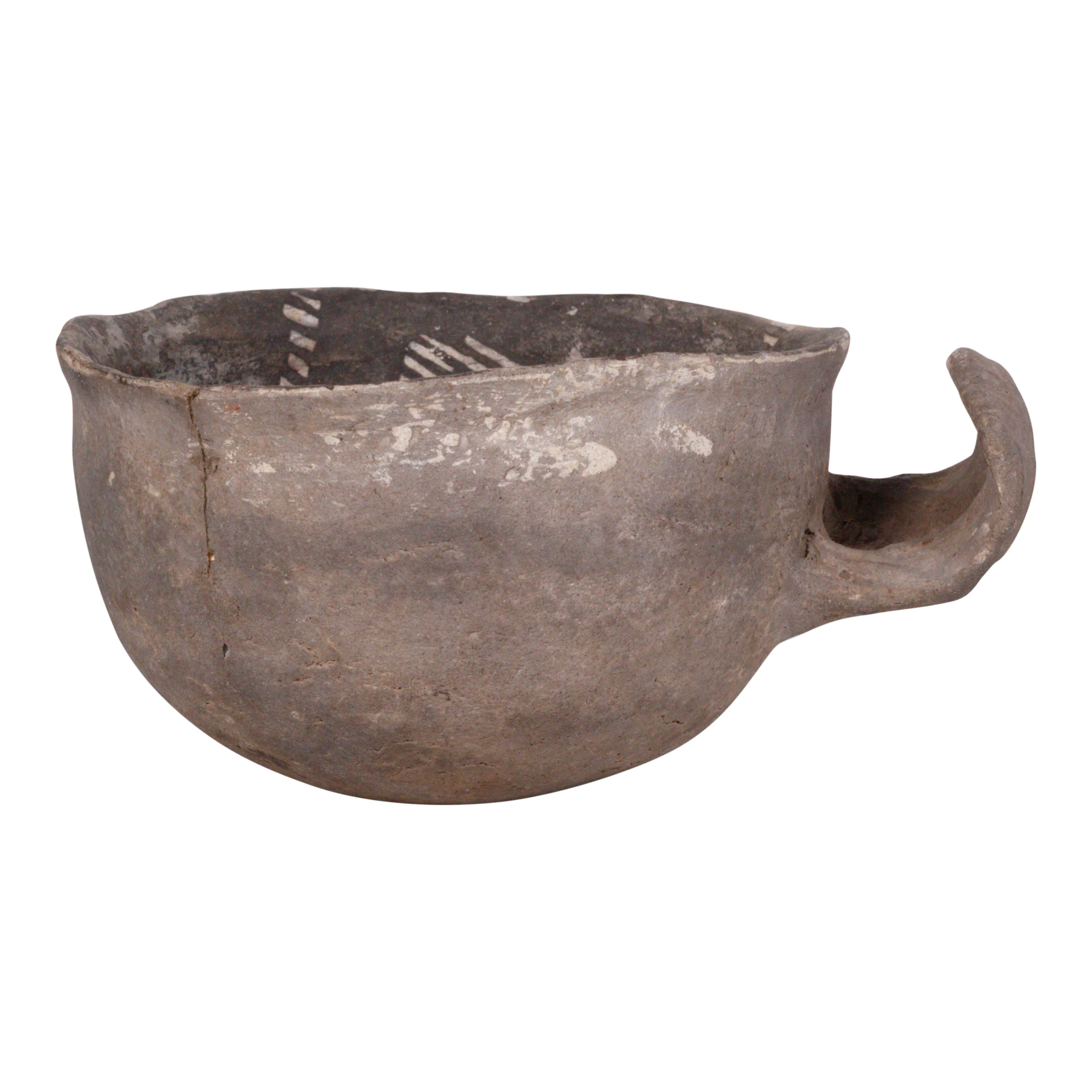
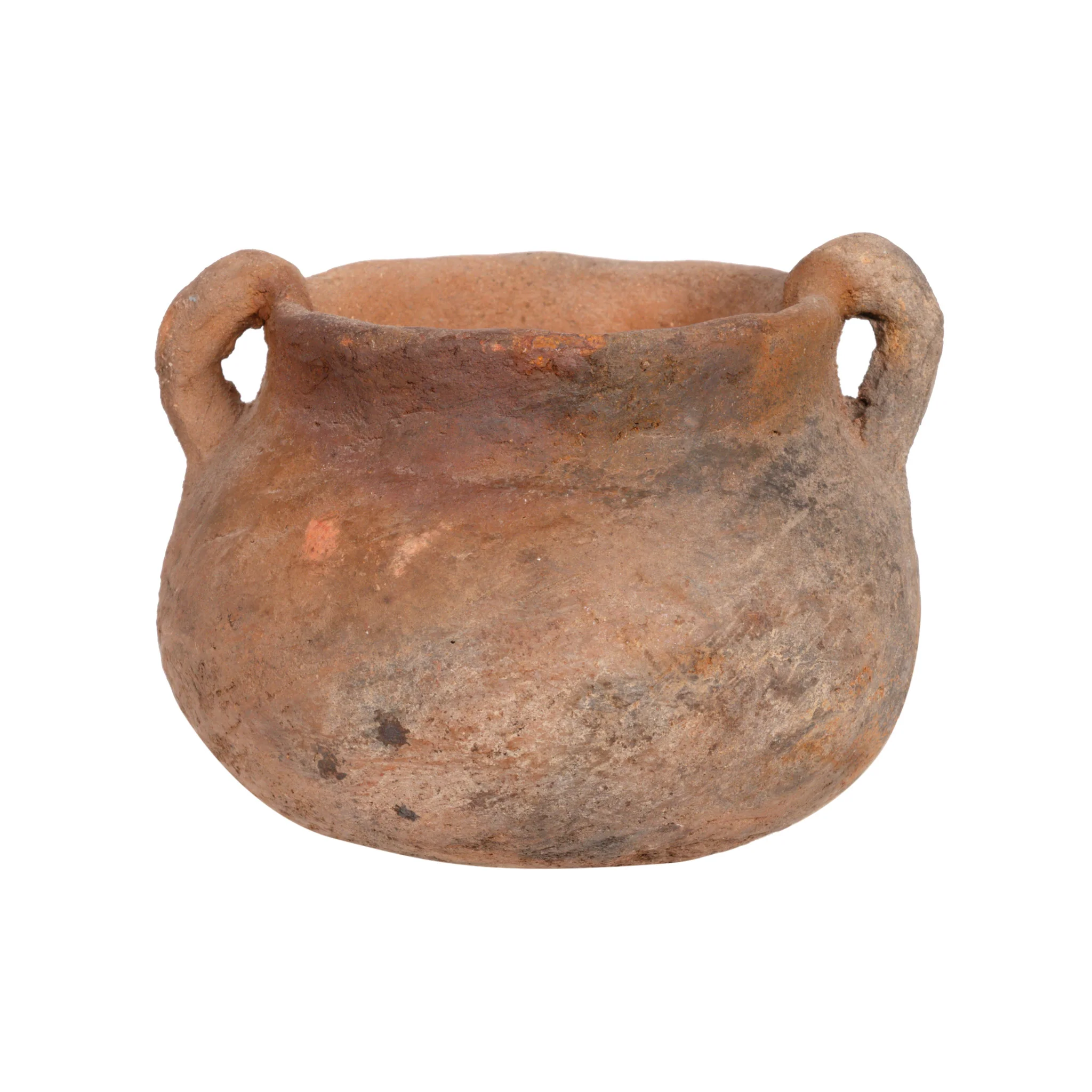
Pre-Columbian, Northern Mexico, Chihuahua region, Casas Grandes, Ramos Polychrome type, ca. 1150 to 1450 CE. A hand-built and stone-burnished pottery olla jar of a globular form with a gently out turned rim. The smooth surfaces are slipped in a warm buff hue and adorned with a repeating register of parallel linear motifs framing serrated shapes, all brought forth with applied red and black pigment. Ex. Barnard. 5" x 5"
Casas Grandes (Spanish for “Great Houses” also known as Paquime) is a prehistoric archaeological site in the northern Mexican state of Chihuahua. Casas Grandes is one of the largest and most complex Mogollon culture sites in the region. Settlement began after 1130 CE and would see the larger buildings developed into multi-storied dwellings after 1350 CE. The community was abandoned approximately 1450 CE. Casas Grandes is regarded as one of the most significant Mogollon archaeological zones in the northwestern Mexico region, linking it to other sites in Arizona and New Mexico, and exhibiting the expanse of the Mogollon sphere of influence.
Casas Grandes (Spanish for “Great Houses” also known as Paquime) is a prehistoric archaeological site in the northern Mexican state of Chihuahua. Casas Grandes is one of the largest and most complex Mogollon culture sites in the region. Settlement began after 1130 CE and would see the larger buildings developed into multi-storied dwellings after 1350 CE. The community was abandoned approximately 1450 CE. Casas Grandes is regarded as one of the most significant Mogollon archaeological zones in the northwestern Mexico region, linking it to other sites in Arizona and New Mexico, and exhibiting the expanse of the Mogollon sphere of influence.
PERIOD: Prehistoric
ORIGIN: Southwest - Casas Grandes, Native American
SIZE: 5" x 5"
$600.00
Casas Grandes Ramos Pottery Olla—
$600.00
More Images


Casas Grandes Ramos Pottery Olla
Pre-Columbian, Northern Mexico, Chihuahua region, Casas Grandes, Ramos Polychrome type, ca. 1150 to 1450 CE. A hand-built and stone-burnished pottery olla jar of a globular form with a gently out turned rim. The smooth surfaces are slipped in a warm buff hue and adorned with a repeating register of parallel linear motifs framing serrated shapes, all brought forth with applied red and black pigment. Ex. Barnard. 5" x 5"
Casas Grandes (Spanish for “Great Houses” also known as Paquime) is a prehistoric archaeological site in the northern Mexican state of Chihuahua. Casas Grandes is one of the largest and most complex Mogollon culture sites in the region. Settlement began after 1130 CE and would see the larger buildings developed into multi-storied dwellings after 1350 CE. The community was abandoned approximately 1450 CE. Casas Grandes is regarded as one of the most significant Mogollon archaeological zones in the northwestern Mexico region, linking it to other sites in Arizona and New Mexico, and exhibiting the expanse of the Mogollon sphere of influence.
Casas Grandes (Spanish for “Great Houses” also known as Paquime) is a prehistoric archaeological site in the northern Mexican state of Chihuahua. Casas Grandes is one of the largest and most complex Mogollon culture sites in the region. Settlement began after 1130 CE and would see the larger buildings developed into multi-storied dwellings after 1350 CE. The community was abandoned approximately 1450 CE. Casas Grandes is regarded as one of the most significant Mogollon archaeological zones in the northwestern Mexico region, linking it to other sites in Arizona and New Mexico, and exhibiting the expanse of the Mogollon sphere of influence.
PERIOD: Prehistoric
ORIGIN: Southwest - Casas Grandes, Native American
SIZE: 5" x 5"
Product Information
Product Information
Shipping & Returns
Shipping & Returns
Description
Pre-Columbian, Northern Mexico, Chihuahua region, Casas Grandes, Ramos Polychrome type, ca. 1150 to 1450 CE. A hand-built and stone-burnished pottery olla jar of a globular form with a gently out turned rim. The smooth surfaces are slipped in a warm buff hue and adorned with a repeating register of parallel linear motifs framing serrated shapes, all brought forth with applied red and black pigment. Ex. Barnard. 5" x 5"
Casas Grandes (Spanish for “Great Houses” also known as Paquime) is a prehistoric archaeological site in the northern Mexican state of Chihuahua. Casas Grandes is one of the largest and most complex Mogollon culture sites in the region. Settlement began after 1130 CE and would see the larger buildings developed into multi-storied dwellings after 1350 CE. The community was abandoned approximately 1450 CE. Casas Grandes is regarded as one of the most significant Mogollon archaeological zones in the northwestern Mexico region, linking it to other sites in Arizona and New Mexico, and exhibiting the expanse of the Mogollon sphere of influence.
Casas Grandes (Spanish for “Great Houses” also known as Paquime) is a prehistoric archaeological site in the northern Mexican state of Chihuahua. Casas Grandes is one of the largest and most complex Mogollon culture sites in the region. Settlement began after 1130 CE and would see the larger buildings developed into multi-storied dwellings after 1350 CE. The community was abandoned approximately 1450 CE. Casas Grandes is regarded as one of the most significant Mogollon archaeological zones in the northwestern Mexico region, linking it to other sites in Arizona and New Mexico, and exhibiting the expanse of the Mogollon sphere of influence.
PERIOD: Prehistoric
ORIGIN: Southwest - Casas Grandes, Native American
SIZE: 5" x 5"